Showing posts with label math as a language. Show all posts

Wednesday, July 14, 2010

Week 22: Don’t Know Why [I Didn’t Come]


Don't Know Why [I Didn't Come]
There is something remarkably transcendent about the fact that we speak so many different "languages" but still end up saying the exact same thing.  

From Week 21: 
All my revulsion over literal interpretations of religious texts the world over, and the mental slavery such readings impose; all my contempt for a “people’s movement” that perpetuates the superficial form of marriage over the real tradition of love, simply because “that is how it has always been;” all the weight of the world comes into sharp focus over the head of an unsuspecting 8 year old boy…who promptly bursts into flames and dies a shrieking heat-death.
From Theodore B. Olson, representing the LGBT community in the trial over their fundamental right to choose who they want to marry: 
The latest words from the...proponents [of Proposition 8 are], "We don't know. We don't know whether there is going to be any harm [in allowing same-sex marriage]."
[I would argue that] "we did it because we don't know" is the same as saying "we don't know why we did it."  And I would submit that "we've always done it that way," that "it's a traditional definition of marriage"...is the same [as saying] "because I say so."
From Jean-Luc Picard, representing Commander Data (an android) in the trial over his fundamental right to choose his own destiny:
"Commander Riker has dramatically demonstrated to this court that Lieutenant Commander Data is a machine. Do we deny that? No, because it is not relevant – we too are machines, just machines of a different type. Commander Riker has also reminded us that Lieutenant Commander Data was created by a human; do we deny that? No. Again it is not relevant. Children are created from the 'building blocks' of their parents' DNA. Are they property?
From Marilyn Manson:
Those who move beyond the album's title and the most blatant aspect of what I do, will then understand what I am trying to say.
From Vexen Crabtree, the minister of the London Church of Satan:
Any Satanists who actually worship the Devil, rather than revering Satan as an abstract value, are immature, unstable, and nothing to do with us.
Through which we can infer:
Any Christians who actually worship Christ, rather than revering Christ as an abstract value, are immature, unstable, and the reason why people like Becky Fisher (of Jesus Camp fame) should be jailed for pedophilia. 
A sentiment echoed by Origen Adamantius, an early Christian scholar and theologian; and Paul of Tarsus, the Apostle to the Gentiles:
Origen: Christ crucified is teaching for babes.
Paul: But when I become a mature man, I put away childish things.
Finally, from the lovely Emily Dickinson:
As by the dead we love to sit,
Become so wondrous dear,
As for the lost we grapple,
Though all the rest are here,--

In broken mathematics
We estimate our prize,
Vast, in its fading ratio,
To our penurious eyes!

Wednesday, June 2, 2010

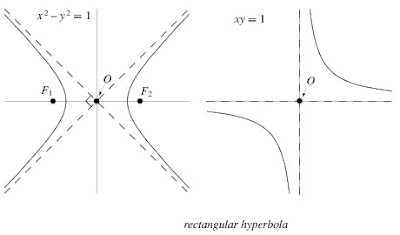
Week 16: Hyperbola


"How do you say [   ] in math?" Billy asked in Week 15. 

"That's a good question." I giggled, before replying:

one step.
two steps.
three steps four—

with each step
move closer
to great Heaven's door.

Wednesday, May 26, 2010

Week 15: The Third Rail

Today, in the middle of a multiplication lesson, some words printed on the cover of Billy’s notebook catch his eye. They are taken from a passage in the bible, Philippians 4:8: "Think about all you can praise God for."

The words seem to call out to him. He stops paying attention to me, deciding that now is as good a time as any to practice his reading comprehension. Proceeding staccato like, he reads each word aloud, leading with his fingers.
“Think...uh-bowt….all…you…can…praise…gaw—” He pulls his finger back, recoiling in disgust. The rhythm is broken. 

“What’s wrong?” I ask.

“That’s Christian. That’s for Christians. I’m not Christian.”
A sharp hiss cuts the air. (Did it come from me, or his mom?) I feel my heart palpitating. The Accenture instincts are kicking in: we call this the red zone—the forbiddingly red third rail of client relationships.

His mother is in the kitchen, within earshot, preparing a refreshing couscous salad that has always been the highlight of my afternoon tutoring sessions. I consider what might happen if this dialog were to continue: she might stop feeding me; she might feed me poison; she might bury me up to my neck in the hot desert sand and throw jagged rocks at my face. Instinct can sometime breed irrational fear.

But I want this so bad. I bite my lip; heart racing, I reach for the rail. Instinct can sometimes breed irrational courage.
“Billy, what does ‘x-squared plus y-squared equals one’ mean?”

He furrows his brow in thought. “It’s math language for circle.”

“Right. How else can we say circle? What other languages do we know?” I draw a picture of a circle on a blank sheet of scratch paper and then, next to it, ask him to spell out “circle” in English and "yuvaruj" in Turkish. As a final touch, I add the Chinese character and the mathematical equation for circle. 

“These are all different ways of saying the same thing, just in different languages.” I explain. “It’s the same with the word ‘God’. It doesn’t (or at least it shouldn’t) matter whether you say ‘God’, like in the Christian Bible, or ‘Allah’, like in the Muslim Qu’ran. They are just two different ways of saying the exact same thing.”

“How do you say it in math?” Billy asks.

"That's a good question." I giggle.  

Wednesday, April 21, 2010

Week 10: Easy Come, Easy Go


Today, I ask Billy to set up a two column table in his notebook, labeling one column “Addition (+)” and the other “Multiplication (x)”. I want to return to the idea of math as a language, to teach him that “times” is just another “word” we use in mathematics to describe a special type of addition problem.

I write the expression 2 x 3 in the multiplication column, and ask him if he knows what it means.
“Two times three.” he responds.

“What does two times three equal?”

“Six!” he proclaims smugly. Time to shut him down.

“Why?”

“Uhhh,” he fumbles, “I just remember it from school.”

I write 2 + 2 + 2 in the adjacent column, and ask him if he knows what it means.

“Two plus two plus two.”

“And what does two plus two plus two equal?”

“Six.”

“Why?”

“Because.” he shows me two raised fingers, raises two more, and then another two, and then counts them out loud: “One, two, three, four, five, six—six!”

“Good. How many twos are you adding together?”

“Three.”
I point him back to the original 2 x 3 expression, and explain to him that 2 x 3 is the same as 2 + 2 + 2. I explain that, in math, we often need to add the same number over and over and over again, and so we created this new word called “times” to make things easier. Saying “two times three” is much easier, and much more concise, than saying “add three twos together”. We use it so much, in fact, that it’s easier to remember that 2 x 3 = 6, rather than have to calculate 2 + 2 + 2 each time.

To drive home this point, I ask him to write the problem “2 x 10 = ” in addition form, and to solve for the answer. He scribbles a long and unwieldy vertical addition problem in his notebook, and after a long and laborious series of calculations, arrives at 22—one two too many. I correct him, to his dismay, and then ask him if he wants to do another one.

His eyes bulge outwards in silent rage as he shakes his head vigorously no. I make him do another one anyway. 2 x 15. He bites down on his pencil in frustration.

With some additional prodding, he finally arrives at an answer, correct this time around. I ask him how he feels.
“I hate math.” he answers quietly, careful to avoid making any eye contact.

“I’m sorry it had to happen this way, but don’t worry, you’ll never have to do that again.” I explain that I have a special present for him that will ensure that something like this will never, ever, happen again.

“A calculator?” he asks.

“No. Even better.” I smirk. Rummaging through my bag, I pull out the holy grail of multiplication—the times table.
It was a hard lesson, but hey—nothing good ever comes easy.

Wednesday, February 24, 2010

Week 4: Know Your Place


The Mathematics Content Standards for California Public Schools, adopted by the Board of Education in 1997, exemplifies my ideal of what government's role in society should be. The standards define "what" a student must look like at each grade level, but leaves it up to the teachers, the parents, the Sylvan Learning Centers, the ACI Institutes, and the indie math tutors (locally grown and organic, like me!) of the world to figure out "how" to actually go about creating those students.

One of the larger categories within the standards is something called "number sense". I interpret number sense as being able to understand numbers abstractly: what numbers mean, what they symbolize, and how they are related. A primary requirement for number sense, (1.0), states:  
Students understand the relationship between numbers, quantities, and place value in whole numbers up to 1,000.
The sub-requirements are:
Count, read, and write whole numbers to 1,000 and identify the place value for each digit. (1.1)

Use words, models, and expanded forms (e.g. 45 = 4 tens + 5) to represent numbers to 1,000. (1.2)
      I've been struggling with how to teach Billy the concept of place value. He can identify the place value of each digit in whole numbers up to 1,000, per (1.1) but I know he doesn't really "get" it, because he's still struggling with (1.2). It's great that he knows how to identify the ones, tens, and hundreds place of a number, but it doesn't do him any good if he can't use this knowledge to get a "sense" of what the number actually means, abstractly.

      Today, I tried introducing a game involving different colored poker chips. I would give him a number and ask him to create that number using a combination of various green (1), blue (10), and red (100) chips. He started getting very fidgety after about 1 minute of gameplay. I was losing him, and we were both getting frustrated.

      I decided to give up on the game when I realized that, while it was a functioning game, it wasn't functioning to teach Billy what he needed to learn. The poker chip game was teaching him to express abstract quantities through color, when it should have been teaching him to express them through number. Hippies would argue that both are equally valid forms of expression, but I say hippies be damned. The reason we have standards is to ensure that, at some basic level, we can all speak a common language.

      I think next week, I'll replace the poker chips with monopoly money. I figure, if the kid is gonna gamble, it's better he learn to gamble on something that the government is almost guaranteed to subsidize, to prop up, to perpetuate as a false promise--an opiate of the masses.

      Wednesday, January 27, 2010

      Week 1: Mathematical Expression


      "This is SO HARD!" he exclaims as he throws his head back, a tortured look on his face. We had been working through some basic addition flashcards for the last 45 minutes, and by some I mean about 10. 5 minutes of awkward finger counting per problem: it was painful for us both.

      "Of course it's hard. You're learning a new language. Learning a new language is always hard." I explain. 

      He scratches his head. "Huh?"

      "Math. Think of it like English, or Chinese, or Turkish. It's just another way of speaking to other people."

      He looks at me like I'm crazy. I tear out a fresh sheet of notebook paper and set up a horizontal grid. I sketch a rough circle in the leftmost box, point to it, and ask him what it is.

      "A circle." he responds. 

      "Right. So in English, we say circle. I write 'circle' in the second box. "How do you say this in Turkish?"

      "Uhh...yu-ah-rruj."

      "Okay..so in Turkish it's yooo-ahhh-rruj." Billy giggles as I struggle with the word. I add my phonetic interpretation to the third box, and then begin writing the Chinese character for circle in the fourth box.

      "What is that?" Billy asks, leaning forward in his chair for a closer look.

      "This is Chinese for circle. This character is pronounced: yuan." 

      "Wow cool!" Billy picks up his pencil and tries to copy the character.

      "Yep. Now watch this." I write the mathematical equation for a circle in the last box. "Do you know what this says?"

      "X-two plus y-two equals 1!" he proclaims. His attempt is valiant. I laugh out loud.

      "It says circle. This is how we say 'circle' in math--in the language of math. You read it like this: x-squared plus y-squared equals 1."

      "Did Einstein create this? My dad says Einstein was the smartest guy in the world."

      "Well, he didn't really create this. But if you showed this to him, he would know that it says circle. He spoke math."

      "Can I speak math?" 

      "Yes, you can speak some math, but you still have a lot more words to learn."